
Career Options After Intermediate in Pakistan
Finishing intermediate is a strange moment: you are suddenly expected to choose a direction that shapes the next decade, usually with limited guidance and a lot of family opinions. This guide lays out the realistic paths available in Pakistan — degrees, professional fields, diplomas, freelancing, and government routes — with honest pros, cons, and who each path suits. No hype, no "one best option": the right choice depends on your marks, interests, and financial situation.
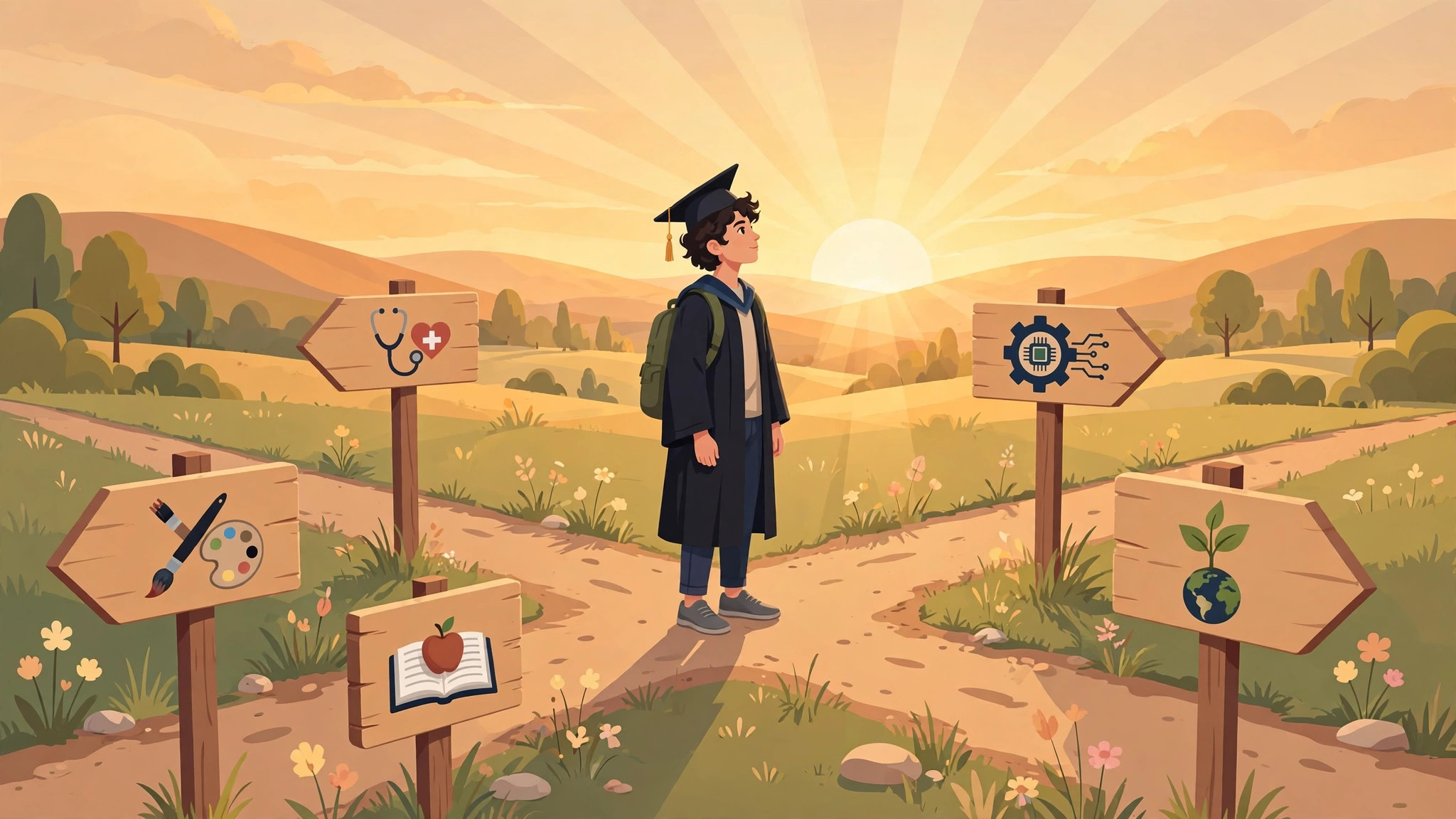
How to Think About the Decision
Before the options, a framework. Score each path on four questions:
- Interest: can you imagine doing this daily for years? (Matters more than people admit.)
- Aptitude: do your strengths match its demands? (Maths-haters suffer in engineering.)
- Market demand: are employers actually hiring in this field in Pakistan and abroad?
- Cost and access: can your family afford the fees and the years without income?
A path scoring well on all four is rare — prioritise interest + market, and be realistic about cost.
Path 1: Traditional University Degrees
BS Computer Science / Software Engineering / IT
Pros: strongest job market in Pakistan and remote international demand; freelancing-compatible; good salaries even at entry level.
Cons: highly competitive admissions; requires genuine interest — dropouts are common among those who chose it only for money.
Suits: logical thinkers who enjoy problem-solving; pre-engineering and ICS students especially.
BBA / BS Business Administration
Pros: versatile — banking, marketing, HR, management; widely available.
Cons: the degree alone rarely differentiates; internships and skills (Excel, communication, digital marketing) matter more than the parchment.
Suits: communicators and organisers; pair it with practical skills from year one.
BS English / Media / Mass Communication
Pros: content, journalism, PR, and digital media are growing; pairs beautifully with freelancing.
Cons: starting salaries are modest; portfolio matters more than grades.
Suits: strong writers and curious minds.
Natural Sciences (Physics, Chemistry, Maths, etc.)
Pros: teaching and research paths; strong foundation for competitive exams.
Cons: private-sector jobs are fewer; usually needs a master's for good options.
Suits: those genuinely passionate about the subject or targeting teaching/CSS.
Path 2: Professional Fields (High Commitment, High Reward)
MBBS / BDS (Medicine & Dentistry)
Pros: respected, stable, strong earning trajectory; demand never disappears.
Cons: brutally competitive entry (MDCAT), 5–6 years of study plus house job, expensive in private colleges.
Suits: top pre-medical students with genuine stamina for long study years.
CA / ACCA (Chartered Accountancy)
Pros: elite finance careers, international mobility, no university required to start.
Cons: gruelling exams with low pass rates; articleship years are demanding.
Suits: disciplined, number-comfortable students (commerce background ideal).
Law (LLB)
Pros: judiciary, corporate law, and independent practice; LAT entry is straightforward.
Cons: early years at the bar pay little; success compounds slowly.
Suits: strong arguers and readers with patience for the long game.
Path 3: Diplomas and Technical Skills (Faster Earning)
- DAE (Diploma of Associate Engineering): 3 years, leads to technician/supervisor roles and Gulf opportunities.
- IT diplomas & certifications: web development, graphic design, digital marketing — 6–12 month courses that feed directly into freelancing.
- Allied health diplomas: lab technology, radiology, pharmacy technician — steady healthcare demand.
Honest note: diplomas get you earning faster but cap out lower unless you keep upgrading skills. They are excellent for students who need income soon.
Path 4: Freelancing and Digital Skills (No Degree Required)
Pakistan is among the world's top freelancing countries. Realistic tracks: content writing, graphic design, video editing, web development, SEO, virtual assistance. Start learning free online, build 3–5 portfolio pieces, then bid on small projects. Income starts small (first $100 is the hardest) but scales with reputation. This path pairs well with any degree — many students freelance through university.
Path 5: Government and Competitive Exams
- CSS/PMS: the civil service — prestigious, but requires a bachelor's first and 1–2 years of dedicated preparation.
- Armed forces: PMA long course and related entries after intermediate — respected career with structured growth.
- Other government jobs: banking (SBP, NBP tests), FIA, ASF, and provincial posts — watch for advertised tests and prepare systematically.
What If Your Marks Are Average?
Average marks close some doors (MBBS merit, top CS universities) but leave most open. Strategy: pick fields where skills beat grades — freelancing, diplomas, BBA-with-skills, media. And remember: in most private-sector hiring, what you can demonstrably do outweighs your percentage within two years of graduation.
Avoid These Traps
- Choosing purely on "scope": "scope" changes; four years of a field you hate is a prison.
- Unaccredited institutes: verify HEC/PMDC/PEC recognition before paying a rupee.
- Ignoring cost: a private degree funded by crippling debt needs a cold-eyed ROI calculation.
- Waiting a "gap year" without a plan: unstructured gap years rarely improve outcomes; if you take one, fill it with skills or test prep.
Scholarships and Financial Aid: Don't Self-Reject
Many students rule out good options assuming they cannot afford them. Pakistan has more funding than applicants realise:
- Merit scholarships: most private universities discount 25–100% for high intermediate marks — check each university's scholarship page, not just the admissions page.
- Need-based aid: HEC need-based scholarships, Ehsaas undergraduate scholarships, and university zakat funds support thousands of students yearly. Applications open on fixed cycles — calendar them.
- Provincial schemes: Punjab, Sindh, KP, and Balochistan each run scholarship and laptop schemes with changing criteria; check your province's higher education portal annually.
- Kinship/employee quotas: children of government employees, military families, and certain professions get reserved seats and fee concessions — ask your parents' departments.
- Private trusts: organisations like the Aman Foundation and various community trusts fund professional education; they are under-applied because students never hear of them.
Rule: apply to every scholarship you plausibly qualify for, even if you assume you will not get it. The application costs hours; the payoff is years of fees. And never pay any "agent" for scholarship placement — legitimate scholarships never charge applicants.
Your Next 7 Days: An Action Plan
- Day 1–2: score 5 shortlisted paths on the four-question framework above, with one parent or mentor.
- Day 3: talk to two people actually working/studying in your top two paths — real testimony beats brochures.
- Day 4: verify accreditation and total cost of your top choice institutions.
- Day 5: list every scholarship and its deadline on one page.
- Day 6–7: decide, write down your why in three sentences, and start the first application. A decided path with imperfect information beats a perfect decision made too late.
Frequently Asked Questions
Which field has the most scope in Pakistan right now?
Technology (software, data, AI-adjacent skills) leads by a clear margin, followed by healthcare and skilled trades with Gulf demand. But "scope" without interest produces dropouts — match market to aptitude.
Can I do freelancing alongside a degree?
Yes — thousands of Pakistani students do. Start with 1–2 hours daily in your first year; scale up as skills grow. It often pays better than entry-level jobs by graduation.
Is a private university worth the cost?
Sometimes. Compare total cost against realistic starting salaries in that field, check accreditation and actual graduate outcomes (not brochures), and consider that skills + portfolio increasingly outweigh university brand.
What if my family wants medicine and I want CS?
Have the honest conversation with data: show them job markets, talk to professionals in both fields, and propose a trial (e.g., one semester). Family support matters enormously — aim to convince, not to rebel.
Seekho Learn Editorial Team — practical guides for students and young professionals.